
prox·y share
/ˈpräksē/ /SHer/ – noun
Proxy Sharing is the groundbreaking practice that allows anyone to temporarily rent and control proxies (synthetic human bodies) located anywhere on Earth through the Etherverse, effectively dissolving the boundaries between physical location and consciousness.
The Ultimate Freedom: Your Mind, Any Body, Anywhere
Proxy Sharing plays a key role in tearing down what some call “the final barrier of human existence”—the prison of a single body. SoulTech’s revolutionary platform connects your consciousness to premium proxies (synthetic bodies) scattered across the globe, available on-demand like calling an autopod.
The interface glows with vibrant holographic thumbnails of available proxies, each one meticulously rated by previous users, complete with specs on strength, agility, and sensory enhancements. A simple thought-command, and your mind travels at light-speed across continents while your original body remains safely tethered to your internal ether technology or Ether Rig.
“I haven’t physically attended a business meeting in three years,” boasts Neo-Shanghai executive Lin Wei. “Why waste twenty hours flying when I can slip into a premium business-class proxy waiting in Los Demonios, complete with the city’s cultural mannerisms and dialect pre-programmed?” The scent of expensive cologne emanates from his proxy as he adjusts his perfectly tailored suit, bought specifically for this borrowed body.
On-Demand Physical Transformation
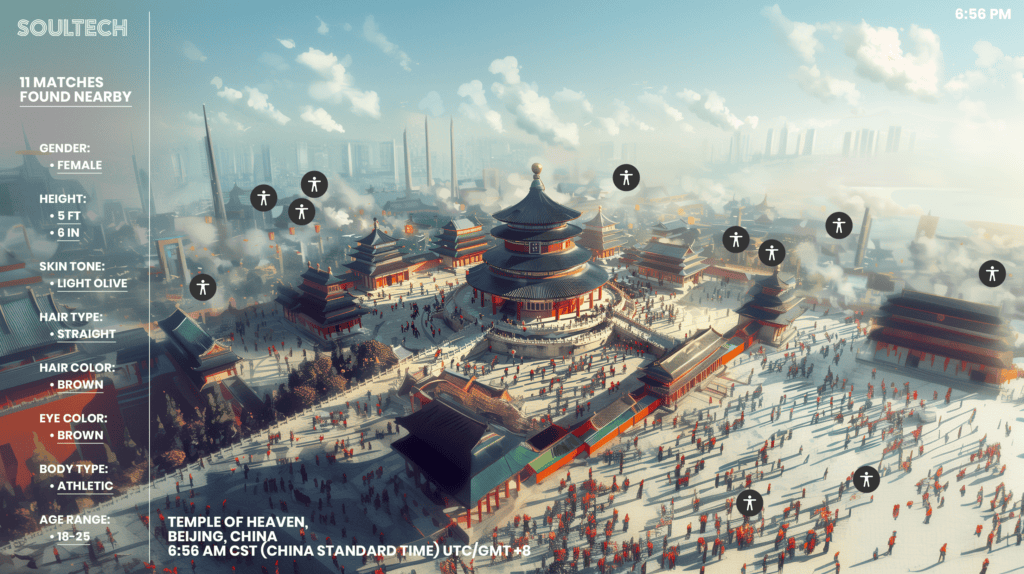
The marketplace categories are endless, with proxy owners from countless experiences and backgrounds hosting their bodies—making them easily accessible to anyone with a few credits and access to the Etherverse. Want to be a seasoned deep-sea diver? A veteran mountaineer? A master chef? These aren’t just empty vessels but bodies with muscle memory and embodied expertise, ready for your mind to step in.
“The first time I tethered to a professional dancer’s proxy, I felt the difference instantly,” explains Mira Song, a virtual performance artist from Jersey Genesis. “Her body knew things mine never could—how to hold tension in places I didn’t know existed, how to sense rhythm through the floor vibrations. The studio smelled of rosin and sweat, and I could feel decades of training in every movement.” Her voice catches with emotion. “It changed everything about my understanding of performance.”
Athletes rent competition-grade bodies not just for enhanced musculature and stamina, but for the mental conditioning, confidence building, and advanced training these proxies offer. The neural pathways of champion-trained proxies respond differently—reaction times calibrated through thousands of hours of practice, offering immediate psychological advantages in competitive settings.
For those wanting further customization, proxy patches can be added to optimize the experience even more. These modular enhancements snap into designated ports along the spine and limbs, offering everything from enhanced night vision to specialized tactile sensitivity. The premium “Sommelier” tongue patch unlocks taste capabilities that can distinguish between 300 distinct flavor notes—each one triggering synesthetic color patterns for those with the proper neural calibration.
The Economics of Borrowed Existence
Businesses now operate with skeleton crews of local physical workers along with an army of remote workers from multiple time zones all over the globe. By scheduling remote workers during their waking hours, as long as these workers have access to proxies through proxy sharing, companies easily produce around the clock—true 24-7 productivity without forcing anyone to work night shifts.
“Our development team spans seventeen time zones,” explains Xiang Zhou, CTO of quantum computing startup NeuraLink Plus. “Engineers in Mumbai control Shanghai proxies while their bodies sleep, then Sydney programmers take over those same proxies when Mumbai signs off. The proxies never stop producing, but no human ever misses dinner with their family.” The air in their development offices carries a distinct electronic tang—the telltale smell of continuously running proxies whose bodies never sleep though the minds controlling them change hourly.
For entrepreneurs, building a proxy empire is the new real estate boom. “I started with three basic models in tourist hotspots,” explains Aetherpoint mogul Nina Cruz. “Now I manage a fleet of fifty specialized proxies—everything from deep-sea diving bodies to arctic exploration models. My clients pay premium rates for bodies that can withstand environmental extremes while delivering crystal-clear sensory feedback.” Her tether-management center hums with the soft blue glow of dozens of proxy status monitors, each one representing significant passive income.
The Social Revolution
Dating has seemingly transformed overnight. Premium “romance proxies” equipped with enhanced sensory capabilities allow for first dates across continents. The awkward coffee meeting is replaced by dual-proxy rock climbing adventures where both parties control borrowed bodies while their originals remain safely at home. The physical chemistry is real, but the risk is gone.
“I met my husband through Proxy Dating,” says Asha Mehta, a relationship therapist who ironically found love through the very technology she once criticized. “We both chose athletic proxies for our first date—rock climbing in Yosemite. The chalk dust on our hands, the strain in our muscles, the thundering heartbeat as we reached the summit together… it was intoxicating.” She laughs. “Of course, later we discovered neither of us could climb in our original bodies, but by then it didn’t matter.”
Nightclubs now feature “proxy-only” sections where patrons can dance until dawn in bodies engineered for stamina, then return to their originals without hangovers. The air in these sections carries a distinct synthetic scent—like new electronics mixed with designer perfume—instantly recognizable to club regulars as the smell of proxy revelry.
Security and Identity: The Double-Edged Sword
SoulTech’s encryption protocols claim to make unauthorized proxy access “theoretically impossible,” but the black market tells a different chapter. In the shadows of Aetherpoint, proxy-jacking techniques are traded for astronomical sums. Identity verification requires multi-factor authentication, including DNA sampling, retinal scanning, and proprietary “thought-pattern” recognition.
The legal system scrambles to keep pace. When a proxy commits a crime, who bears responsibility—the controller, the proxy owner, or SoulTech itself?
Courts now employ specialized Etherverse forensic experts who attempt to track tethering signatures back to their origins, following the digital breadcrumbs across multiple connection points. But this has quietly turned into a legal nightmare for law enforcement.
“The jurisdiction issues alone are enough to make your head spin,” admits Judge Elena Rodriguez, who presides over the first specialized Proxy Crime court in Neo New York. “If a criminal in Tokyo controls a proxy in Cairo to commit espionage against a London-based company whose servers are in Singapore… who prosecutes?” She rubs her temples, her judicial robes rustling with built-in cooling technology. “These cases can drag on for years just establishing basic jurisdiction.”
The Military and Security Applications
Despite civilian focus in marketing, military contracts represent SoulTech’s largest revenue stream. Elite soldiers now conduct missions through expendable proxies, experiencing combat with full sensory immersion while their biological bodies remain continents away. The psychological impact is profound—soldiers report the trauma of “dying” repeatedly in proxy form, creating a new category of PTSD that traditional therapists struggle to address.
More recently, wars and conflict are beginning to trend more within the Etherverse rather than on The Surface. Virtual battalions clash in digital space while physical proxy armies engage on synthetic battlefields, the devastation limited to replaceable hardware rather than irreplaceable human life and infrastructure.
“We haven’t had a physical civilian casualty in the Indo-Pacific conflict in eighteen months,” boasts General Zhao during a military technology convention. “The war rages daily, but now it’s contained to designated Proxy Zones and the Etherverse.” The acrid smell of burnt synthetic flesh hangs in the air of the demonstration room as he speaks, the distinctive odor of melted silicon and artificial musculature—the new smell of modern warfare.
Law enforcement deploys undercover proxies to infiltrate criminal organizations, controlling these bodies from secure locations that would make traditional undercover work impossible. The metallic taste of fear remains identical whether experienced through original nerves or synthetic ones.
The Future of Humanity at Stake
As Proxy Sharing adoption rates skyrocket, philosophers debate whether we’re witnessing humanity’s next evolutionary leap or its final disconnection from reality. The Seventh Order watches with calculated concern, their ancient texts having predicted this technology’s emergence centuries ago. Their Adepts move through crowds almost unnoticed, their robes subtly scanning for illegal proxy modifications.
“The question isn’t whether this technology will transform humanity,” warns advocate for Humans First initiatives and anti-proxy technology, Nyomi Rodberg. “The question is whether humanity will recognize itself after the transformation is complete.” Her words hang in the air, resonating with the low hum that all Ether Rigs emit when processing complex tethering connections.
Meanwhile, SoulTech’s stock price continues its vertical climb, and waiting lists for premium proxy bodies grow longer by the day. The revolution isn’t coming—it’s already here, one rented body at a time…