
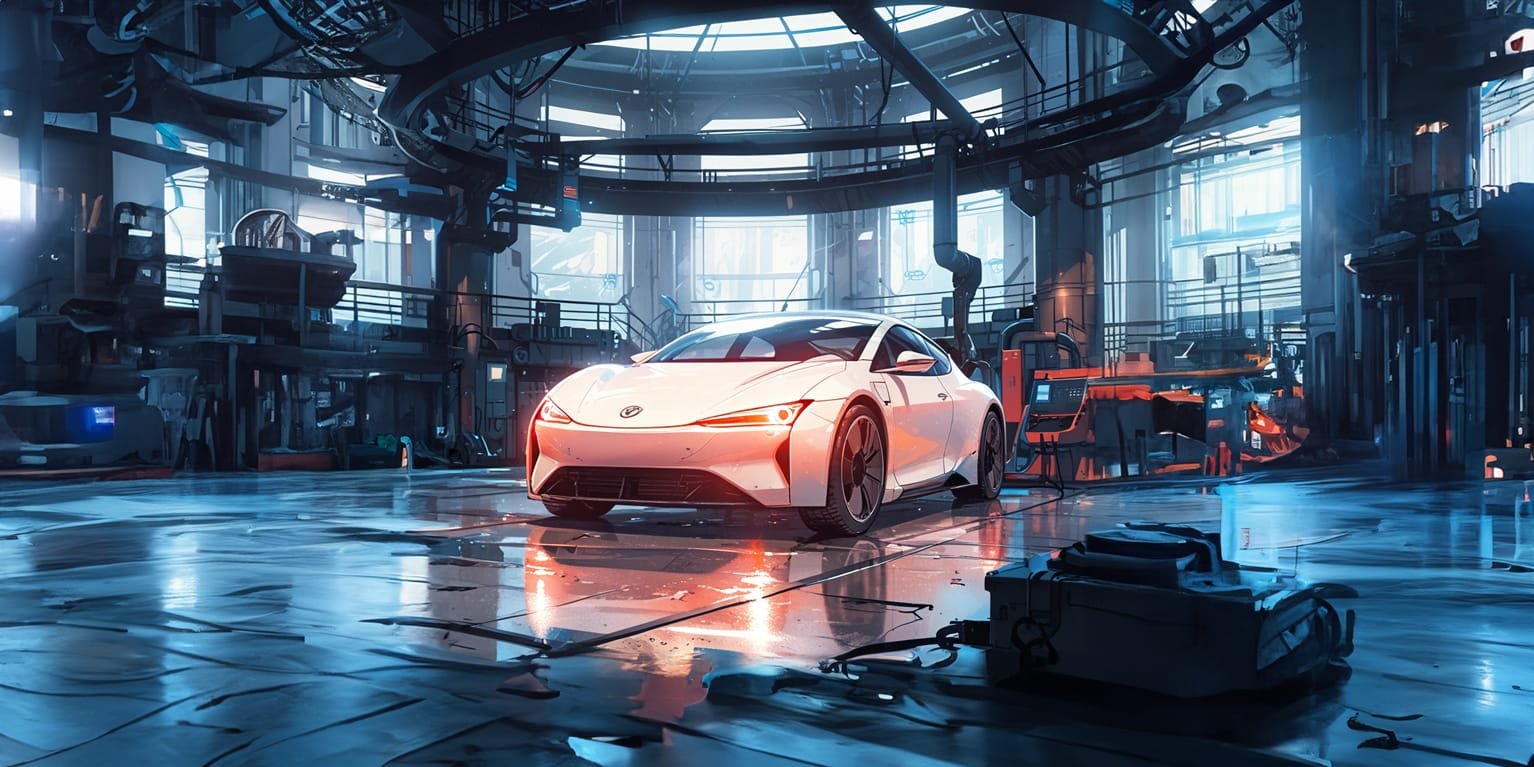
au•to•pod /ˈɔːtoʊpɒd/ (n.): A self-driving vehicle equipped with neural tethering technology that enables it to physically and digitally connect with drivers and other autopods, forming synchronized convoys that communicate instantaneously across global networks while moving as a single, efficient organism.
They called them autopods. A deceptively simple name for the invention that shattered humanity’s understanding of transportation forever.
Picture this moment: Interstate 95. A lone driver attempts to merge lanes when suddenly—CLANG—the steering wheel locks solid as stone. The autopod refuses the command.
Why?
Because fourteen vehicles ahead, a child’s toy has bounced onto the highway and every single connected autopod in a three-mile radius already knows. They’re already adjusting. Already calculating. Already orchestrating the perfect solution together…
Welcome to the age of autopod intelligence.
Autopods don’t just drive—they choreograph efficiency with mechanical precision. Watch them flow across the highways: sleek metallic dancers that suddenly, inexplicably, begin to merge. Not metaphorically. Physically. Electromagnets engage. Coupling mechanisms activate. What was once fifty individual vehicles transforms into a singular, synchronized marvel—a ground-bound symphony moving at speeds that would have been suicidal for disconnected cars.
The lead manufacturer of autopods, Kusi Motors, has always demanded bold thinking. When Tethering Technology first emerged, the entire industry saw only one application—human integration. But Kusi Motors saw a different future…
“The day we received the first Tethering protocols, every corporation on Earth rushed to discover new ways to tether their products to human minds,” recalls Amara Kusi, CEO of Kusi Motors, her voice filled with the passion of a true innovator. “While our competitors scrambled to Adept their products to tether their machines to humans, we asked a completely different question: What if our vehicles could tether to other vehicles? This was the inception of the autopod…”
“My team thought I was insane,” Amara admits with a knowing smile. “Why focus on machine-to-machine tethering when everyone else was chasing the human-machine interface? But that’s exactly why we succeeded. We zagged when the entire world zigged.”
The results were revolutionary. Deep tethering transformed autopods into something unprecedented. An autopod in Tokyo could instantly communicate potential traffic warnings to an autopod headed that way from Toronto. An accident in London ripples through the global vehicular network in nanoseconds. Every autopod becomes a guardian, a guide, a partner in humanity’s greatest transportation network.
“My autopod saved mine and my daughter’s life,” whispers Dr. Elena Vasquez, her voice thick with emotion. “I was in manual mode rushing to get her to school, when suddenly the wheel locked and the autopod decelerated. I was furious—until I saw the massive pileup it prevented three miles ahead… The autopod knew. It always knows.”
Physical tethering shattered every transportation limit. Convoys now blast through atmospheric resistance at velocities 60% higher than their automobile ancestors, consuming 70% less energy. Traffic congestion plummeted by 87%. Accidents dropped by 92%.
“We didn’t just improve transportation,” Amara Kusi explains. “We created a new form of collective intelligence. Every autopod learns from every other autopod. Every journey makes the entire network smarter —more efficient.”
For centuries, autopods reigned supreme…
Fleets of tethered vehicles moved people and goods with unprecedented efficiency. Kusi Motors once again became synonymous with innovation, their autopods the gold standard of ground transportation.


